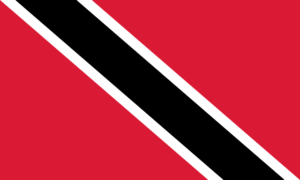
Every year on 31 August, Trinidad and Tobago marks Independence Day: the anniversary of the moment in 1962 when the twin-island nation ceased to be a British colony and became a sovereign state within the Commonwealth. In 2026, the country celebrates its 64th year of independence. Behind that one date sits a much longer story, one that runs from the first peoples who settled these islands thousands of years ago, through Spanish, French and British rule, to the political movement that finally carried Trinidad and Tobago to nationhood.
Before Colonisation: The First Peoples
Human presence in Trinidad stretches back far beyond its colonial history. The archaeological site at Banwari Trace in south Trinidad is recognised as the oldest known human settlement in the eastern Caribbean, dating to around 7000 BCE. Over the centuries that followed, successive waves of Amerindian peoples, including Arawak and Carib groups, settled Trinidad and Tobago, developing distinct communities long before any European ship reached the islands.
Spanish Rule and the Arrival of Columbus (1498 to 1797)
Christopher Columbus sighted and landed on Trinidad on 31 July 1498, during his third voyage, and claimed the island for the Spanish Crown. Spain held Trinidad for close to three centuries, founding the settlement of San José de Oruña (present-day St Joseph) as its colonial capital in 1592. For much of this period, Spanish Trinidad remained sparsely populated and economically modest compared with other Caribbean colonies.
That changed in 1783, when Spain issued the Cedula of Population, offering land grants to Roman Catholic settlers willing to bring capital, skills and labour to the island. French planters from neighbouring Caribbean colonies took up the offer in large numbers, arriving with enslaved Africans, and within a few years the island’s population and plantation economy had grown considerably.
Spanish rule ended in 1797, when a British force under General Sir Ralph Abercromby landed and the Spanish governor, Don José María Chacón, surrendered Trinidad without resistance. Tobago’s colonial history ran on a separate, more turbulent track: the island changed hands repeatedly between Dutch, Courlander, French and British forces from the 1600s onward, before Britain secured permanent control under the Treaty of Paris in 1814.
Slavery, Emancipation and Indentureship
Britain abolished slavery across its empire in 1833, though a transitional “apprenticeship” system kept formerly enslaved people bound to plantation labour for several more years. Full emancipation in Trinidad and Tobago came into effect on 1 August 1838. To replace the plantation labour force, Britain introduced a system of indentureship, and on 30 May 1845 the ship Fatel Razack arrived in Trinidad carrying the first indentured labourers from India. Indian indentured migration continued for decades afterwards, shaping the demographic and cultural character of the country that would later become known worldwide for its diversity.
Trinidad and Tobago were formally united as a single British colony on 1 January 1889, administered from Port of Spain.
The Road to Self-Government
Political power moved slowly out of purely colonial hands over the following decades. The first elections to the Legislative Council were held in 1925, though voting was restricted by income, property and residence qualifications. It took until 1946 for elections to be held under universal adult suffrage, giving all adult citizens the vote regardless of property or income.
The decisive turn came on 15 January 1956, when the historian and scholar Dr Eric Williams founded the People’s National Movement (PNM). In the general election held later that year, the PNM won 13 of 24 elected seats, and Williams became Chief Minister. The PNM would go on to dominate Trinidad and Tobago’s politics for the next quarter-century.
Between 1958 and 1962, Trinidad and Tobago joined nine other British Caribbean territories in the short-lived West Indies Federation, an attempt to form a single independent state out of Britain’s Caribbean colonies. The Federation collapsed after Jamaica withdrew, prompting Williams’ famous remark that “one from ten leaves nought.” Trinidad and Tobago then withdrew from the Federation in January 1962 and pursued independence as a single nation instead.
31 August 1962: Independence Day
Trinidad and Tobago became an independent nation within the Commonwealth on 31 August 1962, 25 days after Jamaica’s own independence. Eric Williams became the country’s first Prime Minister. Sir Solomon Hochoy, who had been Governor since 1960 and was already notable as the first non-European to govern a British Crown colony anywhere in the empire, became the country’s first Governor-General, representing the Queen as head of state.
“One from ten leaves nought.”
Dr Eric Williams, on the collapse of the West Indies Federation
From Independence to Republic: 1 August 1976
Independence in 1962 kept the British monarch as head of state, represented locally by the Governor-General. That changed on 1 August 1976, when Trinidad and Tobago became a republic. Sir Ellis Clarke, one of the main architects of the 1962 independence constitution, served as Attorney General through independence and, after succeeding Hochoy as Governor-General in 1972, was unanimously elected the country’s first President.
A Timeline at a Glance
- c. 7000 BCE: Earliest known settlement at Banwari Trace, the oldest in the eastern Caribbean
- 31 July 1498: Columbus claims Trinidad for Spain
- 1783: Cedula of Population brings French planters and enslaved Africans to Trinidad
- 1797: Britain captures Trinidad from Spain
- 1814: Britain secures permanent control of Tobago under the Treaty of Paris
- 1 August 1838: Full emancipation from slavery
- 30 May 1845: The Fatel Razack brings the first Indian indentured labourers
- 1 January 1889: Trinidad and Tobago united as one colony
- 1946: First elections under universal adult suffrage
- 15 January 1956: Eric Williams founds the People’s National Movement
- 1958 to 1962: The West Indies Federation, and its collapse
- 31 August 1962: Independence, with Eric Williams as first Prime Minister and Solomon Hochoy as first Governor-General
- 1 August 1976: Trinidad and Tobago becomes a republic, with Ellis Clarke as first President
Independence Day Today: The 64th Anniversary
This year’s anniversary has carried an added royal note. In a message to Her Excellency Christine Kangaloo, President of the Republic of Trinidad and Tobago, His Majesty King Charles III congratulated the country on its 64th Independence Day, reflecting on the partnership between the two nations and the community of an estimated 25,000 Trinbagonians who call the United Kingdom home. The King’s message also looked ahead to the Commonwealth Heads of Government Meeting due to take place in November, where the two countries’ shared commitments are expected to be reaffirmed.
More than six decades on from that first Independence Day in 1962, the anniversary remains a moment for Trinidad and Tobago, at home and across its diaspora, to look back on the long road from colonisation to nationhood, and to mark how far the country has travelled since.
Sources: National Library and Information System Authority (NALIS); Wikipedia entries for the History of Trinidad and Tobago, History of Tobago, Eric Williams, Ellis Clarke and Solomon Hochoy; the National Trust of Trinidad and Tobago; and the official message from His Majesty King Charles III to the President of the Republic of Trinidad and Tobago on the occasion of the 64th Independence Day.

Author: TriniGo.com
TriniGo.com is about all things Trinidad and Tobago, a Trini home online. We bring information on things to do, restaurants, hotels, Trinidad and Tobago vacations, flight status and more. This is where new experiences begin. Earn Points and Get Goods. Contribute and earn points that you can use on our site and partners. Earn points when you signup, upload pics, write reviews and browse around.